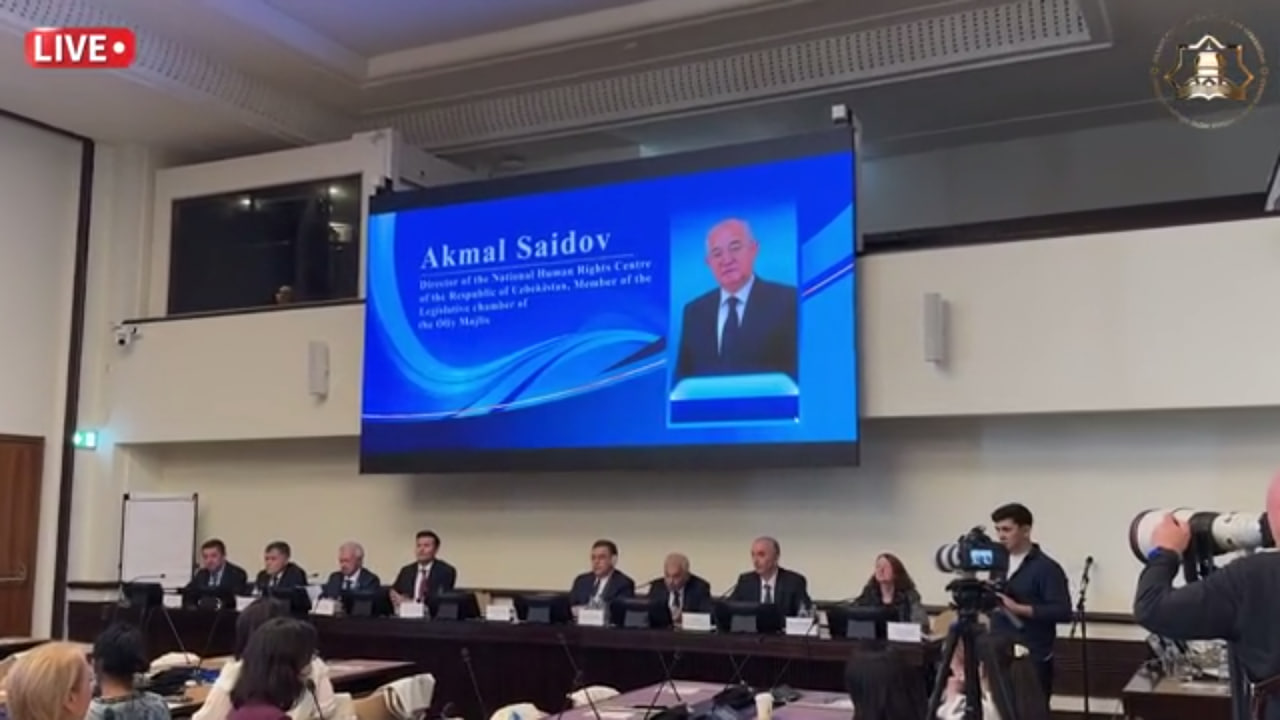
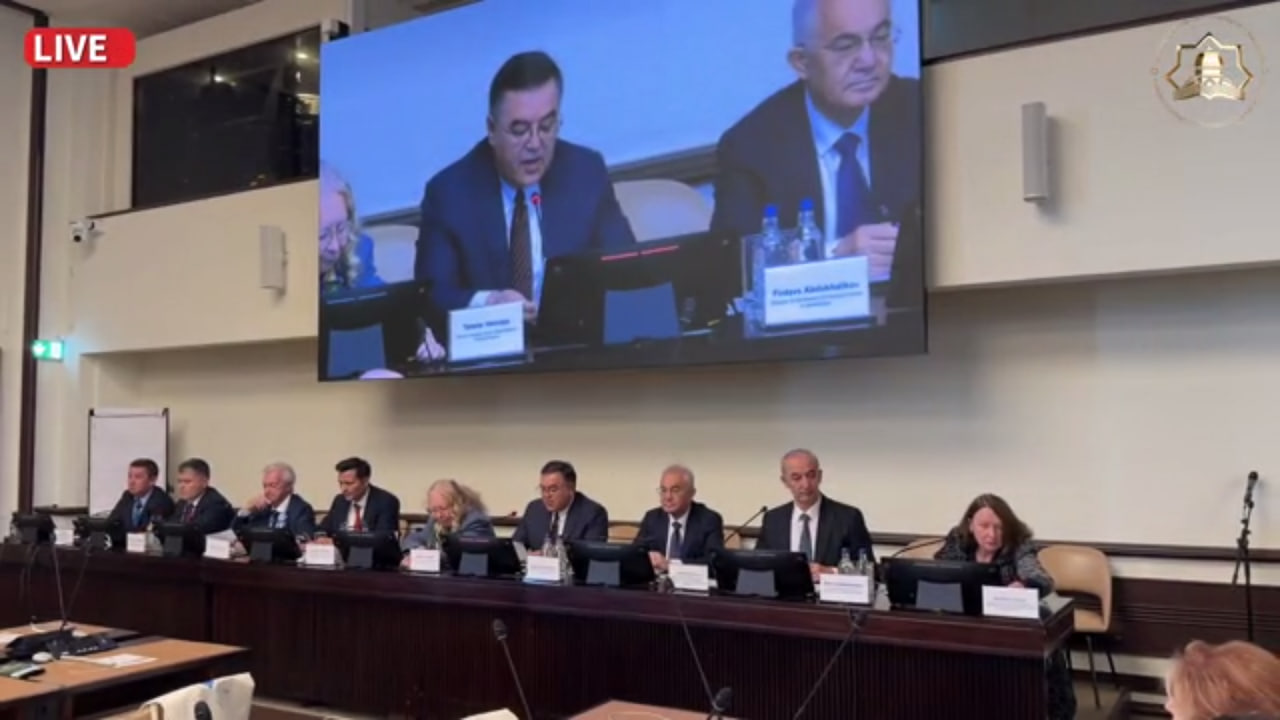
On 22 October 2026, an international scientific conference entitled “Islamic Civilization: Mawarannahr’s Great Spiritual and Scientific Heritage and Horizons of Enlightenment” was held at the Palais des Nations, United Nations Office at Geneva.
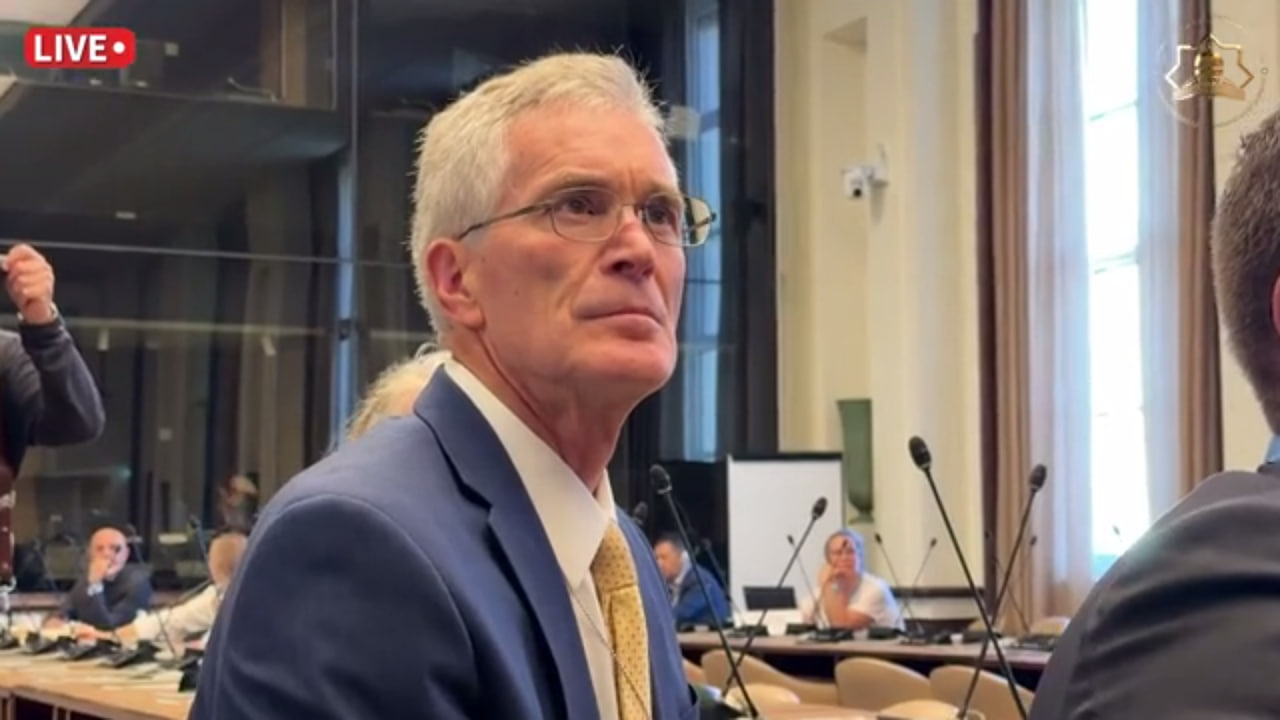
Akmal Saidov, Director of the National Centre of the Republic of Uzbekistan for Human Rights and Member of the Legislative Chamber of the Oliy Majlis delivered a keynote address at the opening ceremony.
The conference was jointly organized by the Islamic Civilization Center in Uzbekistan, the Committee on Religious Affairs of the Republic of Uzbekistan, the Academy of Sciences of the Republic of Uzbekistan, the Imam Bukhari, Imam Maturidi and Imam Tirmidhi International Scientific Research Centers, and the Permanent Mission of the Republic of Uzbekistan to the United Nations Office and other international organizations in Geneva.
The event was held as part of the implementation of an initiative put forward by President of the Republic of Uzbekistan Shavkat Mirziyoyev at the 80th session of the United Nations General Assembly in September 2025 to organize a special presentation at the United Nations of the rich spiritual and scientific heritage of Imam al-Bukhari, Imam al-Tirmidhi and Imam al-Maturidi.
The main objective of the conference was to introduce the international community to Mawarannahr’s outstanding contribution to world civilization, promote Uzbekistan’s spiritual and scientific heritage, and strengthen international cooperation in science, education and culture, as well as the advancement of enlightenment and tolerance.
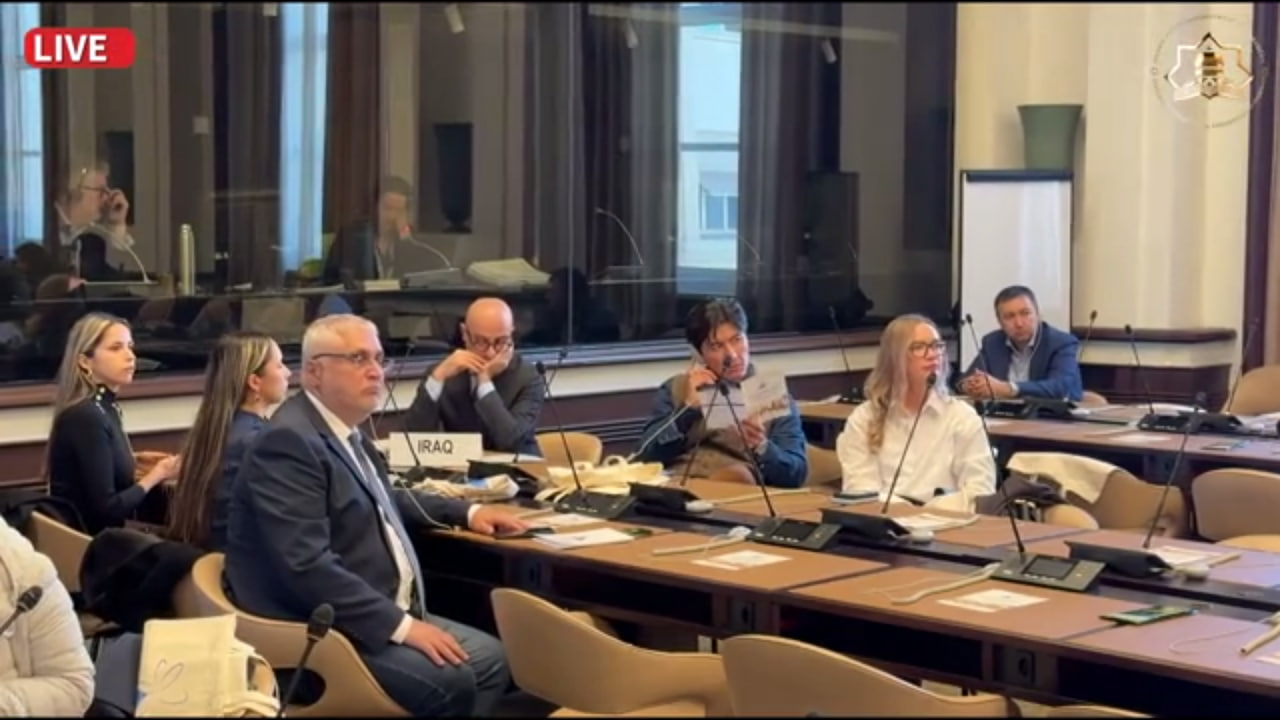
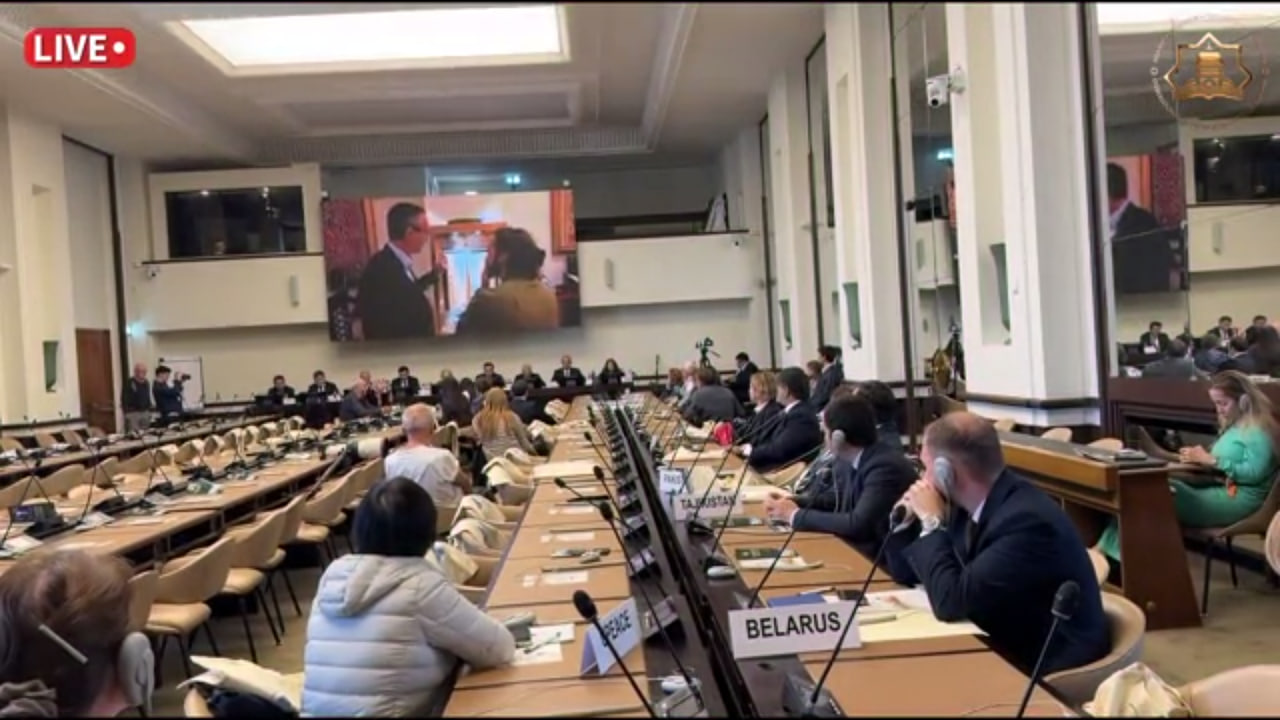
The conference brought together representatives of the diplomatic corps, the international academic and expert communities, government and scientific institutions of Uzbekistan, and foreign specialists.
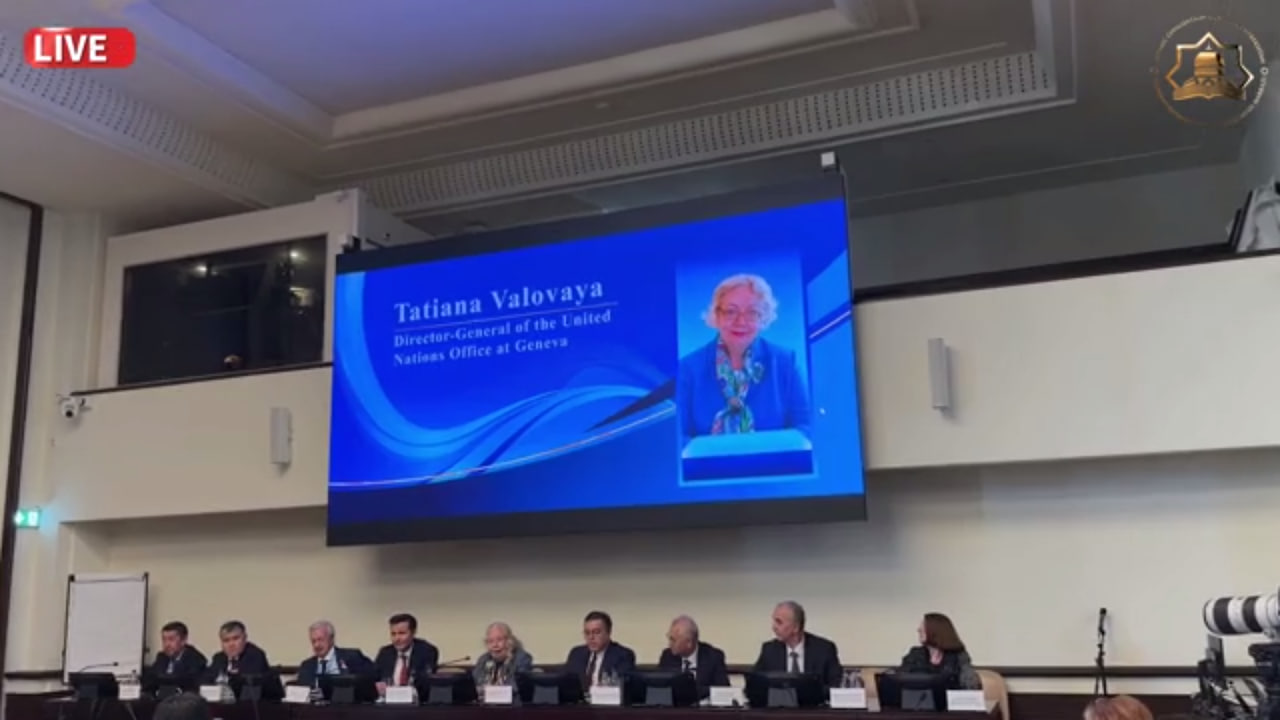
The opening ceremony featured addresses by Tatiana Valovaya, Director-General of the United Nations Office at Geneva; Eldiyor Toshmatov, Permanent Representative of the Republic of Uzbekistan to the United Nations Office and other international organizations in Geneva; Firdavs Abdukhalikov, Director of the Islamic Civilization Center in Uzbekistan.
In his address, Akmal Saidov emphasized that Uzbekistan is a country with ancient traditions of statehood, a rich legal culture and centuries of scientific achievement. This heritage is reflected in the Avesta, an ancient monument of spiritual and legal culture, Sogdian legal documents and the outstanding intellectual legacy of Islamic civilization.
Particular attention was given to the scholarly schools that developed in Mawarannahr, including Quranic studies, Hadith studies, Islamic jurisprudence (fiqh), theology and Sufism (tasawwuf). The invaluable contributions of Imam al-Bukhari, Imam al-Tirmidhi and Imam al-Maturidi to religious and philosophical thought and the development of spiritual and moral values were highlighted.
It was also emphasized that the region’s scientific heritage encompasses remarkable achievements in algebra, medicine, astronomy, geography, geodesy and other natural sciences. The names of Muhammad al-Khwarizmi, Abu Rayhan al-Biruni, Abu Ali ibn Sina and Mirzo Ulugh Beg hold a distinguished place in the history of world science.
Tolerance, as one of Uzbekistan’s most important historical values, was another central theme of Akmal Saidov’s address.
It was noted that, for centuries, the territory of present-day Uzbekistan has been a place where different peoples, religions, languages and cultures have interacted. Ethnic, religious, linguistic and intercultural tolerance forms an integral part of the country’s historical heritage and has become one of the defining characteristics of New Uzbekistan.
In this context, the continuing relevance of the UNESCO Declaration of Principles on Tolerance, adopted on 16 November 1995, and the United Nations General Assembly resolution of 12 December 1996, aimed at further promoting the principles of tolerance, was emphasized.
Special attention was also paid to the international initiatives of President Shavkat Mirziyoyev. In particular, in 2017, the President proposed the adoption of a United Nations General Assembly resolution entitled “Enlightenment and Religious Tolerance,” which was unanimously adopted in December 2018.
Akmal Saidov further highlighted the close and inseparable relationship between cultural heritage, enlightenment, the rule of law and the protection of human rights. The right to education, freedom of thought, conscience and religion, participation in cultural life, and the right to enjoy the benefits of scientific progress are essential elements of human dignity and sustainable development.
He noted that preserving the heritage of Mawarannahr’s great thinkers must go hand in hand with expanding young people’s access to knowledge, strengthening intercultural dialogue and fostering respect for religious and cultural diversity.
As part of the conference’s scientific programme, Bakhrom Abdukhalimov, Vice-President of the Academy of Sciences of the Republic of Uzbekistan, delivered a presentation on the scientific discoveries of Central Asian scholars and the international mission of the Islamic Civilization Center in Uzbekistan. Robert Blum, President of the Diplomatic Circle of Geneva, addressed the universal significance of Uzbekistan’s Islamic civilizational heritage.
Davronbek Makhsudov, First Deputy Chairman of the Committee on Religious Affairs of the Republic of Uzbekistan, spoke about enlightenment and tolerance in New Uzbekistan, while Kathleen Göbel, Director of CULTUR-COOPERATION INTERNATIONAL in Berlin, presented a paper on the spiritual and literary traditions of Islamic civilization.
Otabek Muhammadiyev, Deputy Director of the Imam Bukhari International Scientific Research Center, delivered a presentation on the scholarly legacy of Imam al-Bukhari and Imam al-Tirmidhi. Komiljon Shermukhamedov, Director of the Imam Maturidi International Scientific Research Center, explored the significance of tolerance and moderation in the great scholar’s intellectual heritage.
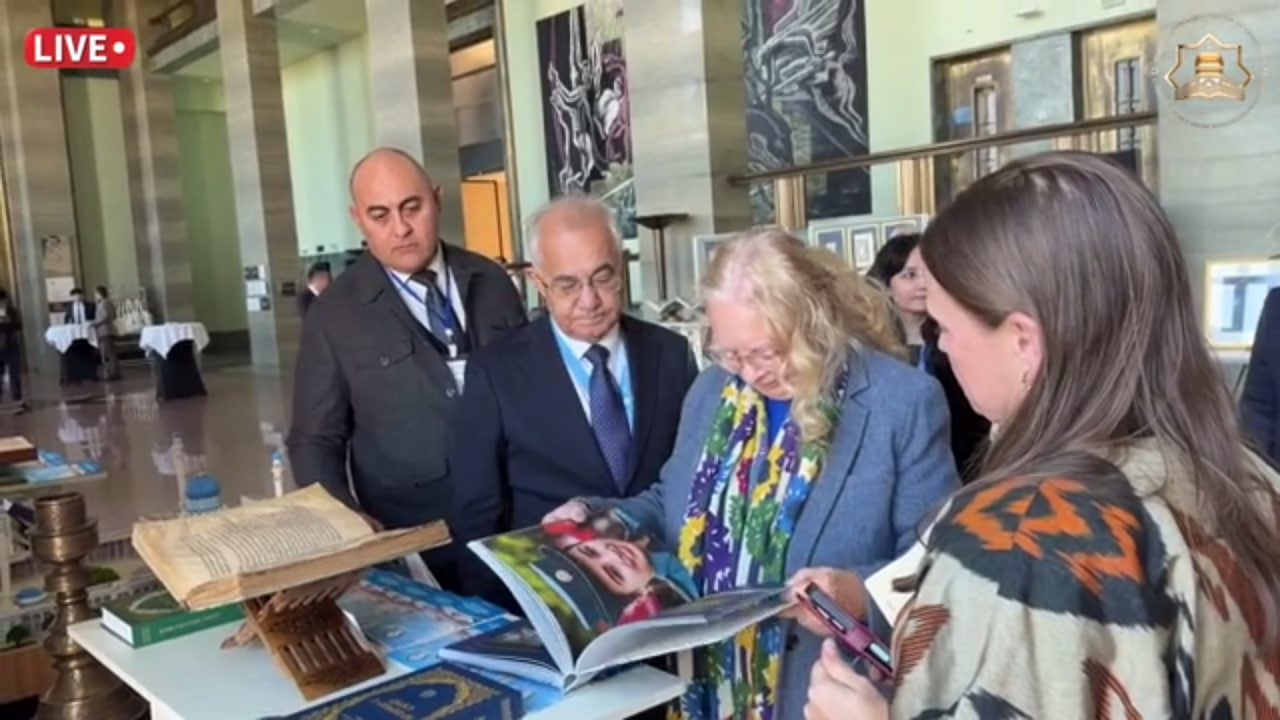
An important part of the event was an exhibition dedicated to Islamic civilization and the legacy of Mawarannahr’s great scholars. The exhibition featured materials presenting the activities of the Islamic Civilization Center in Uzbekistan, replicas of ancient manuscripts, scholarly publications, miniatures and other exhibits reflecting the region’s rich scientific and cultural history.
Participants were also shown thematic videos presenting the Islamic Civilization Center as a new-generation museum and highlighting the scientific and spiritual heritage of outstanding scholars.
The conference concluded with discussions on opportunities for expanding international cooperation in scientific research, cultural heritage preservation, education and dialogue among civilizations.
The international conference in Geneva marked an important step in implementing the initiatives of the President of Uzbekistan to promote the country’s spiritual and scientific heritage internationally.
Akmal Saidov’s participation in the event highlighted the historical connections between the traditions of enlightenment, legal culture and tolerance and the modern principles of human rights protection, the rule of law and respect for human dignity.
Press Service of the National Centre
of the Republic of Uzbekistan for Human Rights